

Oliver Cromwell (1599–1658): An Inductive Biography

Oliver Cromwell (1599–1658)
An Inductive Biography
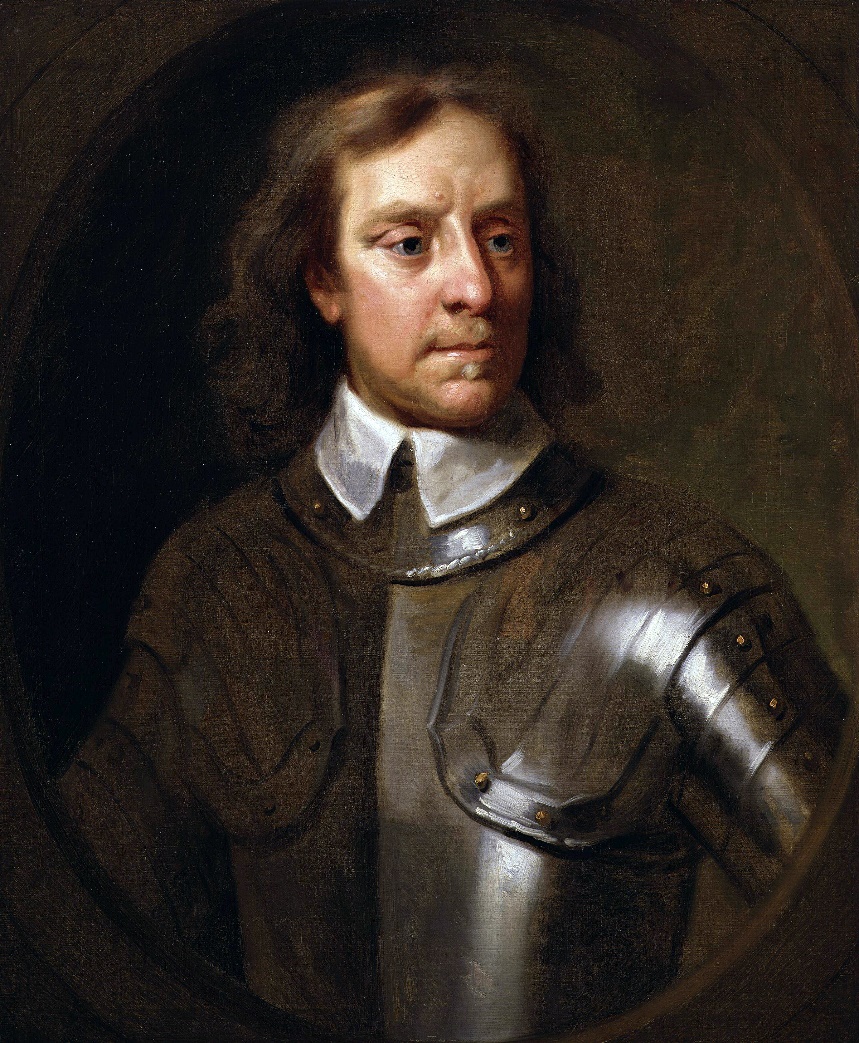
This article is one of six ‘Inductive Biographies’ which Eugen Kolisko wrote in 1938–39 for The Modern Mystic, immediately after his essay series on reincarnation. An ordinary biography moves forwards, from childhood to the individual’s contribution; Kolisko reads a life inductively — beginning with that contribution and asking what individuality, and what destiny, it reveals. Read this way, a biography makes a karmic perspective visible: a life shows itself as a task carried into the world. His contribution is the Commonwealth — England remade between king and parliament — and Kolisko traces it back to a man who steps out of obscurity only when, as he puts it, the hour strikes for his mission. Or in Goethe’s terminology: the time is at hand.
Out of Obscurity
Scarcely anything of real importance is known about the youth of Oliver Cromwell. He appears out of obscurity like a meteor, as the hour strikes for his mission to begin.
Born in 1599, on April 25th in Huntingdon, the son of a country gentleman, his upbringing and the early part of his life were quite ordinary. He went to the local school, was married at 21 to Elisabeth Bourchier, and took her home to Huntingdon to his mother. She bore him eight children in a few years, in 1628 he was elected to represent his native town in Parliament. Before his first motion could be tablet his Parliament was closed by force, the doors being locked on the inside. But “the King ordered that a tile of soldiers should break open the door. And so, amid the cries and entreaties of the Speaker, held down in his chair by force, amid the battery at the door, and the tramp of approaching soldiers, Eliot’s final protest against tyrannic rule was adopted, and then the nation’s last hope of peace was dissolved with the Parliament.” This was Cromwell’s first “parliamentary“ experience. His destiny confronted him immediately in the threat coming struggle between King and Parliament. Alter tins event there was no Parliament for eleven years.
When he again took his seat in the Long Parliament (in 1640) he was still unknown. Sir Philip Warwick “discovers” him in the following words:
“The first time I ever took notice of him was in the beginning of the Parliament held in November 1640, when I vainly thought myself a courtly young gentleman ; for we courtiers valued ourselves much upon our good clothes. I came into the house one morning, well clad, and perceived a gentleman speaking, whom I knew not, very ordinarily apparelled, for it was a plain cloth suit, which seemed to have been made by an ill country tailor; his linen was plain, and not very clean, and I remember a speck of blood upon his little band, which was not much, larger than his collar ; his hat was without a hat-band; his stature was of a good size; his sword stuck close to his side; his countenance swollen and reddish; his voice sharp and untuneable, and his eloquence full of fervour… .”
The Unsuspected General
Cromwell remained a rather unknown figure in Parliament until the moment when the civil war broke out, and Parliament needed an army. Then he suddenly assumed military prominence. In peace, he was unknown, in war, he was in his right element. In a few months he was Captain, then Colonel, and soon afterwards Lieutenant-General. His first business was to get together men and horses, lie formed a special troop of cavalry which later became the famous nucleus around which the whole Parliamentary army was focussed.
It is an astonishing fact that this “ordinary“ man finds in himself hitherto entirely unsuspected military genius, and not until the age of 43. “None but incurable visionaries,” says Picton “would stake anything on the chances (at 43) of suddenly developing unsuspected powers.” (My italics.) It was as though the sword was thrust into his hand by a superior force, not to be relinquished until the destruction of the last Royalist army was complete.
After the first victory Cromwell was given the name of “Ironside,” but it soon became the designation of his regiment—the famous nucleus of 840 men gathered from the Fen country. yeomen, freeholders and their sons like himself, the “Lord of the fens.” His influence over them was enormous, He was their prophet and their priest as much as their commander. Their order, discipline, utmost gravity and piety, amazed all people. No idle standing in the streets, no panics on Sundays or fast days; no swearing, no drinking were allowed, on pain of heavy fines. They were prepared to leave farm or shop or wife and home “to submit themselves to iron discipline and to face all the peril of battle, murder and sudden death.” (Morley’s Oliver Cromwell.) This was the beginning of the creation of the “New Model,” as the threat army was afterwards called. Cromwell himself writes about it: “Presbyterians, Independents, all have here the same spirit of faith and prayer; the same presence and answer. They agree here, have no names of difference; pity it is it should be otherwise anywhere! All that believe have the real unity, which is most glorious; because inward and spiritual, in the Body, and to the Head. … In other things God hath put the sword in the Parliament’s hands—for the terror of evil-doers, and the praise of them that do well. If any plead exemption from that—he knows not the Gospel.”/
The great battles of the revolution were looked upon as miracles, bringing the cause step by step to its achievement. Cromwell’s cavalry—the arm he favoured most—flashed through the battlefields like the lightning of a divine judgment. In nine years everything was over. Charles I was dead and his son an exile.
The Lord’s Instrument
Cromwell himself never boasted. He was utterly convinced that the merit of victory was not his, but the Lord’s. “I can say nothing,” he cries, “but surely the Lord our God is a great and glorious Cod! He only is worthy to be feared and trusted, and His appearance particularly to be waited for. He will not fail His people.”
Writing about the battle of Dunbar (most significant of the battles) on September 3rd, 1650, Cromwell writes: “The Enemy prosecuted the advantage. We were necessitated; and upon September 3rd, by six in the morning, we attempted their Army:- after a hot dispute for about an hour we routed their whole Army; killed near Three-thousand; and took, as the Marshall informs me, Ten-thousand prisoners: their whole Train, being about thirty pieces great and small; Hood store of powder, match, and bullet; near Two-hundred Colours. I am persuaded near Fifteen-thousand Arms left upon the ground. And I believe, though many of ours be wounded, we lost not above Thirty men. Before the Fight our condition was made very sad, the Enemy greatly insulted and menaced us; but the Lord upheld us with comfort in Himself, beyond ordinary experience.”/
We know that Cromwell exclaimed on that memorable morning, when the sun was rising over the sea: “Now let God arise, and let His enemies be scattered! “and the whole army joined in the singing of the psalm. …”The heathen raged, the Kingdoms were moved: He uttered His voice; the earth melted. The Lord of Hosts is with us ; the God of Jacob is our refuge.”
All this is of course a reflection of the Puritan spirit. But it seems to me that not enough importance is given by commentators to this extraordinary psychological power of Cromwell’s—his absolute conviction of divine guidance; but not guidance in a general sense; it was the conviction that the people of England and the English Parliament were a “chosen“ people. What had happened in biblical history was but the model for what had to happen in England.
It is impossible not to be thrilled by his monumental speech in Parliament on July 4th, 1653. (See Carlyle, Speech I, Vol. II, pp. 256-79.) It is the very Gospel of militant Puritanism; I should say, a religious document of unequalled power in modern times. I quote a fragment of it:
“I know you well remember that Scripture, ‘He makes His people willing in the Day of His Power. God manifests this to be the Day of the Power of Christ; having, through so much blood and through so much trial as hath been upon these Nations, made this to be one of the great issues thereof: to have His people called to the supreme Authority… . Thus God has owned you in the eyes of the world; and thus, by coming hither, you own Him: and as it is in, (xliii, v. 21) —it’s an high expression ; and took to your own hearts whether, now or hereafter, Cod shall apply it to you: ‘This People saith Cod, I have formed for Myself, that they may show forth My praise. I say, it’s a memorable passage… . Consider the circumstances by which you are called hither; through what strivings, through what blood you are come hither,—where neither you nor I, nor no man living, three months ago, had any thought to have seen such a company taking upon them, or rather being called to take, the Supreme Authority of this Nation! Therefore, own your call! Indeed I think it may be truly said that there never was a Supreme Authority consisting of such a Body, above One-hundred-and-forty, t believe; never such a Body that came into Supreme Authority before, under such a. notion as this, in such a way of owning Cod, and being owned by Him. And therefore I may also say, never such a People so formed, for such a purpose, were thus called before.” … “And we have thought, some of us, that it is our duties to endeavour this way; not merely to look at the Prophecy in Daniel, ‘And the Kingdom shall not be delivered to another people,’ ‘and passively wait.’ Truly God hath brought this to your hands; by the owning of your call; blessing the Military Power… .”
And further on: “ This being so, truly it puts me in the mind of another Scripture, that famous Psalm, sixty-eighth Psalm; which indeed is a glorious Prophecy, I am persuaded, of the Gospel Churches—it may be, of the Jews also. There it prophesies that ‘tie will bring His People again from the depths of the Sea, as once He led Israel through the Red Sea.’ And it may be, as some think, Cod wilt bring the Jews home to their station‘ From the isles of the sea,’ and answer their expectations‘ as from the depths of the sea.’ Such are His People, drawn out of the multitudes of the Nations and People of this world.”
Can one doubt, after having really seriously studied this whole speech, but that Cromwell considered himself to be the instrument of the will of Jehovah, for the founding of the English constitution as a repetition of the Jewish one?
A Chosen People and a Promised Land
What Cromwell brought into a concentrated and concrete existence by the sword, was the culmination of a whole epoch which had been developing since the publication of the English Bible in 1538. Green, in his Short History of the English People, expresses it tersely: “England became the people of a book, and that book was the Bible.” … He says: “The disclosure of the stores of Creek literature had wrought the revolution of the Renascence. The disclosures of the older mass of Hebrew literature wrought the revolution of the Reformation.” And he continues: “When Cromwell saw the mists break over the hills of Dunbar, he hailed the sun-burst with the cry of David: ‘Let God arise, and let his enemies be scattered!‘ “And further on: “The whole nation became, in Fact, a Church.” And it was to this Church that Cromwell presented the sword, to conquer the Promised Land.
But what was the “Promised Land?“ It was England— this seventeenth-century England, the “islands of the sea.”
Whatever we may think of a “chosen people,” or of its peculiar prophets in our present day, it seems plain enough that at least Oliver Cromwell was a real (perhaps the only) “British Israelite.”
One thing is certain: the year 1650 (Dunbar) marks the moment of the birth of the new England. Throughout the military phase of his career, as champion of the Lord of Hosts, Cromwell appears more like one possessed of the Old Testament prophetic spirit—“a god-intoxicated man.” But once tie was established as Lord Protector of the new England, Scotland, and Ireland, he emerged from the half-twilight of the past, into the full sunlight of modern European politics. Just as his military powers had so unexpectedly dawned, so his political greatness appeared equally unexpectedly when once tie had sheathed his sword and taken his Jupiterian seat in the Nation’s counsels.
He established the beginning of British naval power. The defeat of the Dutch had left England the chief sea-power of the world. The Declaration of Right, the Toleration Act, his success in bringing about a co-operation of alt the Protestant nations, his defiance of Spanish, French and Roman authoritative power, make him, paradoxically enough, an inaugurator of modern liberalism. He really was the first to establish the “balance of power“ in Europe; and the Fame of the Protector was at last acknowledged everywhere. So this man, once regarded as a regicide, and cursed by the whole of Europe, was at last acknowledged as sovereign, even by Louis XIV, the Emperor, and the Pope. The ambassadors of many nations Hocked to Whitehall.
It can really be said, that from 1650, the British Folk-Soul fully “incarnates” into the British peoples. Only then are England, Scotland, and Ireland entirely united.
This could never have happened without the forcible removal of the old autocratic power. Of this, Charles I was the representative. Cromwell really stands opposite the King in the same relation as that of the prophets to the recalcitrant pagan kings of the Old Testament. There was no question of personal animosity on either side. It was a drama of fate.
The Book of Joshua
It is interesting that Cromwell’s favourite among the Books of the Old Testament was the Book of Joshua. It lived so intensely in his mind that it was always before his vision in his fighting days. He quotes from it incessantly. What Moses could not accomplish, the conquest of the Promised Land, was the mission delivered to Joshua. It one reads this Hook together with the Speeches of Cromwell, and if one compares the deeds of Joshua’s host with the deeds of the Ironsides,—quite apart from the fact that all the Puritans were thoroughly familiar with the Bible—one finds a parallelism that is so striking that it he bewilders the imagination.
The words spoken to Joshua at the beginning of his mission determined the whole direction of his task :
“Moses my servant is dead : now therefore arise, go over this Jordan, thou and all this people, unto the land which 1 do give to them, even to the children of Israel. Every place that the sole of your foot shall tread upon, that have I given unto you, as I said unto Moses.”
The whole Book is a book of war; the fulfilment of this message. At the end, all the tribes have their own places in the Holy Land. But the kings of this land had to be removed. And there were innumerable kings. In the famous Chapter X, after the battle of Gideon, where the sun and moon are bidden to stand still in the valley of Avalon—the parallel to the battle of Dunbar—five of the innumerable kings are found hidden in a cave:
“Then said Joshua, Open the mouth of the cave, and bring out those five kings unto me out of the cave.
“And they did so, and brought forth those five kings to him out of the cave, the king of Jerusalem, the king of Hebron, the king of Jarmuth, the king of Lachish, and the king of Eglon.
“And it came to pass, when they brought out those kings unto Joshua, that Joshua called for all the men of Israel, and said unto the captains of the men of war, which went with him, Come near, put your feet upon the necks of these kings. And they came near, and put their feet upon the necks of them.
“And Joshua said unto them, Fear not, nor be dismayed, be strong and of good courage: for thus shall the Lord do to all your enemies against whom ye fight.
“And afterward Joshua smote them, and slew them, and hanged them on five trees; and they were hanging upon the trees until the evening.”
But this is not all. Kings after kings are slaughtered. And in Chapter XII there is a list of all of them:
“The King of Jericho, one; the King of Ai, one: the King of Tirzah, one (and so on): all the Kings, thirty and one.”
One could call this Book of Joshua the Book of the Judgment of the Kings.
I cannot help but find absolutely the same spirit in the struggle of the Parliament, and especially of Cromwell, against the “King.” His head had to fall. The “people“ had to set “their feet on his neck.”
Neither of these pictures can be judged according to the usual standards of morality—not in Canaan, nor in England.
Ireland, Scotland and the Price of Union
Another reproach often levelled against Cromwell is that he was the “hammer of the Irish.” As a matter of fact, he destroyed Ireland; there is no doubt about it. But also here the same psychology is at work; for to Cromwell the Irish were as the Amorites, Canaanites, etc., were to Joshua. And the Pope was his Baal.
The history of the foundation of modern England is written in blood. We have found that it is so, also in the other articles of this series. The Celtic race—especially the Irish and Welsh nations—had to go under for the structure of the modern age, particularly of modern England, to be built. Cromwell is only the last of the destroyers—Henry II, Edward I and Henry VIII had done their share; or rather, not these kings personally, but the necessity of fate that worked through them.
The Scotch had escaped through the initiative of Robert Bruce, in 1314. But Cromwell forced the union. In that case it was not a destruction, as in Wales and Ireland, but it united the Scotch Puritanism with the English temporal power. And so he became the “Lord Protector“ of the United Kingdom, an achievement that had been prepared through the ages.
Cromwell’s behaviour in Ireland can only be explained by his Old-Testamental and super-individual fanaticism. It is at the same level as the “impersonal“ regicide of 1649.
In the parallelism between these two historical epochs, the Conquest of the Holy Land and the Puritan revolution—there are of course many more examples than these we find connected only with Cromwell The Old-Testamental character of the whole movement is undeniable. It also had the most tremendous effect upon the whole of English cultural life. There is no understanding either for Art or Science. The hatred of all religious and artistic representations is a common feature of Puritanism and Hebrewism. The only Art that is tolerated is music; and the reason for this ties in the fact that music is related to the inner activity of the soul, not to outer images.
Puritanism and the Modern Age
But the modern time is an intellectual one; it begins mainly in England, and it had to be prepared for by a Renaissance of Hebrewism and a destruction of “images”—that is, of every kind of imagination in the field of religion, and of art. This applies most especially to the Celtic (Irish) visionary psychology.
After Cromwell, modern science makes its triumphant entry. (See our article on Sir Christopher Wren, Modern Mystic, Vol. II Wren actually just met Cromwell in his youth.)
The mission of Puritanism was to introduce the duality of a Sabbatarian religion which was always challenged by a more or less godless Science. Art, which could have bridged over the gap, was extinguished for this period, and never quite recovered.
This world-historic fact remains connected with Puritanism and with its sword-bearer Oliver Cromwell.
A Speculation, and a Coincidence
In conclusion, for those who are inclined to speculate on the riddles of re-incarnation, it may not be difficult to imagine Cromwell and his whole Puritan and “Ironside“ following, which swept over England like an avalanche, as the re-incarnated Joshua and his captains and men of war.
One almost incredible coincidence in this whole story is the fact that Cromwell re-introduced the Jews into England after 400 years of banishment.
“He summoned a conference of notables and clergy to debate the matter at Whitehall.” (It was on December 12th, 1655, “Jew Wednesday.”) He himself presided, and opened the discussion with an earnest speech from the chair in favour of the concession. The clergy however were averse to any hospitality to a race manifestly under a “divine curse,” and the conclusion of the conference was unfavourable. Nevertheless, the Protector so far stretched his power in favour of the Jews as to connive at their settlement. Little by little they began to come over, and happily for the commercial prosperity of the country have never been disturbed.”…
The Man
As a man, Cromwell stands out as a product of the modern age, projected upon the background of Old-Testamental inspiration and religion, out of which his common sense, his practical insight and goodwill emerge like the sun out of the mists of the past.
His death, strangely enough, occurred on September 3rd (1658), the anniversary of Dunbar and of Worcester, the national holiday of the revolution.
Almost his last words were: “Truly God is good. My work is done; but God will be with his people.”
- [Ed.] Section headings are editorial additions for the web edition; the original text runs continuously. Obvious scanning errors in the source have been silently corrected; the author’s wording is otherwise unchanged. The PDF previously offered on this site broke off mid-sentence; this web edition restores the full ending from the original document.