

Thomas Becket (1118–1170): An Inductive Biography

Thomas Becket (1118–1170)
An Inductive Biography
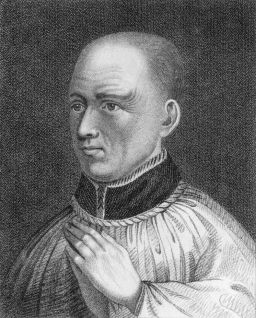
This article is one of six ‘Inductive Biographies’ which Eugen Kolisko wrote in 1938–39 for The Modern Mystic, immediately after his essay series on reincarnation. An ordinary biography moves forwards, from childhood to the individual’s contribution; Kolisko reads a life inductively — beginning with that contribution and asking what individuality, and what destiny, it reveals. Read this way, a biography makes a karmic perspective visible: a life shows itself as a task carried into the world. His contribution is Canterbury — a martyrdom that drew pilgrims for generations and helped to form the English folk-soul — and Kolisko traces it back to the knightly purpose that united chancellor, archbishop and martyr in one man.
The Riddle and a Clue
Innumerable biographies have been written about St. Thomas à Becket. All his biographers have met with the same problem: how to reconcile his life as Chancellor with his life as Archbishop and with his martyrdom. My reason for including him in these articles, is because a clue to the solution of the riddle may be found in a study of his connections with the Order of the Knights Templar.
What has been so difficult to reconcile in his life is that he was a soldier and a Knight during his Chancellorship, but immediately he became Archbishop of Canterbury he showed himself to be a true priest and a most ardent and ascetic defender of the supremacy of the Church. If his Knighthood was of a type similar to the religious orders of Knighthood, this discrepancy vanishes.
Thomas a Becket was born on December 21st, 1118, the day of the Apostle St. Thomas the “Doubter,” who put his fingers into the wounds of Christ to convince himself of the Resurrection, and who later became the great Apostle of the East, and was martyred in Madras, where his tomb is still shown. Recent excavations there have proved the truth of this long-contested account of his death. From the coincidence of Becket’s birth on this day he received his own name of Thomas.
St Bernard and the New Knighthood
In 1119 the Order of the Knights Templar was founded by Hugo de Payns and a few other Knights connected with Geoffrey de Bouillon. They were granted a house on Mount Moriah near the Temple of Solomon. In 1128 the Order received its “ Constitution “ from Bernard of Clairvaux (the great St. Bernard), who in his treatise In Praise of the New Warfare expounded the whole idea of serving Christ in the military Orders. At the Council of Troyes in the same year, the Order was sanctioned by the Pope at the recommendation of St. Bernard. In the same year too one of the early friends of St. Bernard, Hugh, Comte de Champagne, became a Knight Templar instead of becoming a monk in Clairvaux Abbey, and was congratulated by St. Bernard in a letter which is still in existence.
St. Bernard, as everyone interested in these matters knows, was the spiritual leader of Christianity in the first half of the twelfth century. He lived from 1090 till 1153. He re-founded the Cistercian Order of Monkhood and it spread in a short time, under his influence, all over Europe. He healed the schism in the Church, and became the arbiter of every question in the religious life of his time. He must have been the greatest preacher that has ever lived—Kings, Popes, whole nations, were really subject to his word, it was entirely through him that in spite of all opposition, the Second Crusade was inaugurated in 1147. He created the statutes not only of the Temple Orders, but also of nearly every monastic system of his time. It really would be more correct to say that the whole Christian Church was guided by him, the Popes of his time being only figureheads, or, as in some cases, his own pupils.
Why do I lay so much emphasis on the life of St. Bernard? Because through his influence the young Thomas Becket was made Chancellor of England and educator of ungovernable “majesty“ whom we know as the English King Henry II.
In 1148 there took place a memorable Council summoned to Rheims by St. Bernard and his pupil the Cistercian Pope Eugenius III. To this Council came Theobald, the then Archbishop of Canterbury, with his young clerk, Thomas a Becket. Becket was the son of a merchant in Cheapside and was called “Thomas of been educated by a friend of his father’s, all the Knightly arts of riding, fighting, falconry, etc.; and was then sent to the Sheriff’s office to educate him in the conduct of a public career, after which he was appointed secretary to the Archbishop of Canterbury. In this capacity he became a constant messenger between England and the continent. He studied canon law in the famous school of Bologna, and went several times to Rome to conduct negotiations between the Archbishop and the Pope. Theobald, from the beginning, wanted him to be his successor in the Sec; and so Thomas was also being trained for an ecclesiastical career. Although still only in minor orders, he was present at the Council of Rheims.
The house of the Archbishop of Canterbury was the meeting-place for all the most eminent and talented youth of the day. John of Salisbury, known as the “flower of English learning,” who was also a great political figure, and had been the round of the French schools, was also introduced to this house by letters of recommendation from St. Bernard, one of whose intimate friends he had been.
Taking all these facts together it becomes clear that many threads were being drawn together by St. Bernard leading to great decisions both in ecclesiastical and political life, in which Thomas a Becket was destined to play an important part.
The Succession of England
At Rheims what had to be discussed was a matter which had the most far-reaching effects upon the whole of English and European history—the succession to the English throne. At that time Stephen, the “usurper,” was king. The real heir was Henry II, the son of the Empress Matilda. She was the daughter of King Henry I of England—and heiress—and at 12 years of age was married to the German Emperor Henry V, son of the famous Emperor Henry IV who did penance at Canossa.
Matilda’s husband died young, and she married to Geoffrey of Anjou. On his death in 1152 her son, Henry, became the heir to Anjou, Maine and Touraine, Duke of Normandy and suzerain lord of Brittany. In the same year Henry married Eleanor of Aquitaine, who, until then, had been Queen of France. Her divorce from Louis VII was one of the greatest sensations of the time. It was brought about on the advice of Bernard of Clairvaux, and young Prince Henry, through this most remarkable marriage, acquired dominion over the whole of southern France! Eleanor’s adventures in the Holy Land had shown plainly that she was the Queen of the Troubadours rather than the Queen of Louis Vll, who for his part, preferred a monkish life. Both he and his Queen—although they had so little in common—were the most devoted pupils of St. Bernard.
So in one year, Henry, at 19, who concentrated in himself the blood of France and England, became lord of immense territories ; and now the Church decided that he should receive the crown of England too. He conquered Stephen and his Knights at Malmesbury (1153) and after Stephen’s death was crowned on December 19th, 1154 at Winchester.
Chancellor and Educator of a King
During the whole of these years, from 1148 to 1154, Thomas Becket had been unceasingly working as negotiator between all the people concerned in this great drama. Immediately after Henry was crowned, he was appointed Chancellor of England. Bernard of Clairvaux had died in May 1153. But John of Salisbury, intimate in his counsels till the end, came over in 1154 to England to the famous Canterbury establishment as one of the Archbishop’s, and also as Thomas’ secretary. He was Becket’s most faithful and intimate friend and counsellor from that time until Thomas’ death. In the same year a great friend of John of Salisbury’s, and the only Englishman who ever occupied the chair of St. Peter, Adrian IV (Nicholas Breakspear), became the Pope.
It is an amazing fact that during the three years ‘51 to ‘54, while all these activities were taking place, Becket had become the most intimate friend and companion of the young Henry II who was then 18-21 years of age, while Becket was 32-35.
For what purpose had all that been arranged?
It is clear that the whole future of Europe depended on how this turbulent prince Henry, of French and English blood, would turn out as ruler of the Angevin and English Empire. This culture of Christendom was at stake. St. Bernard foresaw this. Someone must be there as educator and adviser of the Emperor both for the Crown and for the Church. It was one of the greatest pedagogical experiments in history! But unfortunately, it did not succeed.
In Knighthood, and for guidance in the civil life, Henry and Thomas Becket were ideal companions. And in the first seven years, until the death of the Archbishop Theobald, all went well. Thomas was certainly the most splendid Chancellor that England could have had.
Two Natures: Henry and Thomas
It is hardly possible to conceive two people so utterly unlike each other, both spiritually and physically, as Becket and Henry. Henry had a phenomenal physique, was a giant in strength, red-haired, bull-necked, lion-like in appearance and in nature, subject to terrific choleric fits when he would hurl himself to the ground and was quite uncontrollable, yet he was learned far beyond the learning of his day. But his learning was rather the result of his restless curiosity and love of power than actual capacity. He was like a force of nature, a creature of mythology, an uncouth god determined to become a human genius.
And Becket?—A contemporary describes him: “Slim of growth and pale of hue, dark of hair, with a long nose and straightly featured face; blithe of countenance was he, winning and lovable in all conversation, frank of speech in his discourse, but slightly stuttering in his talk, so keen of discernment and understanding that he could always make difficult questions plain after a wise manner.”
His power of self-control must have been remarkable. He could adapt himself to any circumstances with entirely genuine versatility. What to many seems to be inconsistency in his nature is really due to his universality, but he was in no way superficial. Even when travelling in pomp and grandeur as Chancellor, he was secretly ascetic, and his hair-shirt was no novelty adopted when he became Archbishop. It is said that on one occasion during his Chancellorship a prying landlord discovered him “a bare-footed man, prostrate on the floor, on whom, after kneeling and praying, sleep had fallen.” …
When he became Archbishop in 1162, and only then was consecrated priest, he realised fully the import of it. His was no playing at religion. John of Salisbury, the friend who had known him so well in his secular life, tells us of his ministry :
“When he was alone he shed tears in wonderful abundance, and when he stood at the altar, he seemed to be present even in the body at the Passion of the Lord. He handled the divine sacraments with great reverence, so that the very handling of them strengthened the faith and fervour of those who witnessed it.”
From what has been said it is clear that two great influences were the real builders of Becket’s mission: St. Bernard’s, and Theobald’s the Archbishop of (Canterbury. Through the former Becket was prepared to undertake the secular education of the King; through Theobald he was prepared to undertake the furtherance of the religious life; both influences were the continuation of the ideals of Hildebrand, the great Gregory VII. Becket actually united in himself the Cistercian and the Cluniac (Hildebrandian) streams. The aim was to create a world-wide Christian culture. Henry, through his ancestry, was predestined for Empire. Through his power, this ideal could have been realised ; but only it the power hat! been controlled. But after seven years—from 1154 to 1161—the King had become more and more tyrannical, autocratic and ambitious. He only wanted Becket as a satellite. But Becket was not Chancellor as other men had been Chancellor; his position was but one step of the path he had undertaken. He had adapted himself to the worldly position in order to educate the wild genius of Henry.
The Templar Connections
Now we come to another aspect of Becket’s so-called “worldly “ career. We remember that Bernard of Clairvaux was the spiritual founder of the Knights Templar. Becket, when he made his famous entry into Paris as Chancellor, “with his glittering retinue of Knights“ and scores of grooms and footmen, his eight cars each drawn by five horses—stayed (and also on other occasions) at the Hotel du Temple, the house of the Templars. He had enormous quantities of gold at his disposal ; but was himself entirely frugal and simple in his personal habits. This is precisely what we always understand as the customs of the Knights Templar, whose enormous wealth was never for themselves but only for others.
In descriptions of the siege of Toulouse, which he conducted for Henry, we find many references to his connection with various places of the Templars in France. When later, Becket had to decide his course of action after the Council of Clarendon, he had a meeting with the Grand Prior of the Templars who, “throwing himself on his knees before him and with many tears entreating him that if he paid any regard to his safety of that of the Church, he should yield. Becket exclaimed: ‘It is my master’s pleasure that I foreswear myself which I resolve to do, and to repent afterwards if I may.“ This Constitution of Clarendon was virtually to establish the entire supremacy of the King over the Church.
Becket. as we saw above, gave in, but with reservations ; but later withdrew his consent to the supremacy, which led to his flight and exile from England. His interview, as described above, with so important a person as the Grand Prior, is conclusive enough evidence of Becket’s specific connections with the Temple Order.
During his exile, Becket stayed in the Cistercian cloister of Pontigny and took the Cistercian habit. The Cistercians did all they possibly could in support of his claims for restitution to the archbishopric; and their efforts resulted in Henry threatening to destroy all the Cistercian cloisters in England—a threat which was only withdrawn when Becket removed from Pontigny; but finally realised about four hundred years later through Henry VIII—Henry II’s most congenial successor! (My next article will deal with these parallels in detail.)
Cistercians and Templars had the same rule. One could say they represented the “internal“ and “external“ aspects of St. Bernard’s all-embracing influence.
But the most remarkable of all Thomas a Becket’s connections with the Templars is in the foundation after his death of a special Order of Knighthood called the Knights of St. Thomas of Acre. Some say this Order was founded by Richard Coeur-de-Lion, after the conquest of Accon in Palestine in 1191. Another account of the foundation is that an Englishman, William, Chaplain to Radulfus of Diceto, Dean of London (one of Becket’s biographers), founded a chapel dedicated to St. Thomas the Martyr and that Peter de Rupibus, Bishop of Winchester, “caused the Patriarch of Jerusalem to take order that the brethren of this church, who were before laymen, might be under the Order of the Templars, wearing a Cross on their breast.” (Maitland, History of London, Vol. II, 886.)
These Knights had been a long time in Palestine ; they also had charge of the hospital which was founded by Becket’s sister at his birth-place in Cheapside, and remained there until its cancellation, through Henry VIII, in 1538. They wore a red cross on a white mantle, and had much to do with the arrangement of the pilgrimages to Becket’s shrine at Canterbury.
After Becket’s death, his four murderers—(hardly the excellent philosophers they are represented to be in the famous modern Murder in the Cathedral)—were ordered to serve under the Templars in the Holy Land for fourteen years. And it is most significant that the sword with which Becket had been slain became an object of veneration, and we find that “no oath was considered so binding in the thirteenth century as one which was sworn upon ‘the holy mysteries‘ and ‘the sword of St. Thomas.’“
Holinshed tells us that Robert Bruce père had also to take this oath. His son Robert, the liberator of Scotland, is the man who transferred the Temple Order after its abolition, to Scotland, where it was transformed into the Order of the Thistle.
I think we have now brought forward sufficient data to prove that the earlier part of Becket’s life brought him into direct connection with the principles, if not with actual membership, of the Knights Templar.
The Legend of His Parentage
It is only these facts which lead us to pay some attention to the once famous legend of Becket’s parentage.
There has been a great deal of controversy as to whether he was of Saxon or Norman birth, and many conclusions have been based on one view or the other. Now we know for certain that his father Gilbert was a Norman who was born in the same place as Archbishop Theobald, subsequently coming to London as a merchant. His mother is said to be Matilda, though some believe that her name was Rohese (Rose). A legend has been preserved about her, which was only printed in the fifteenth century although its origin is certainly earlier, but the majority of Becket’s biographers do not mention it. The legend says that his mother, the daughter of a Saracen Emir, fell in love with Gilbert, Becket’s father, when he happened to be, as a Crusader, a prisoner at her father’s court. After he had been set free and returned with his friend Richard to England, she is said to have followed him, all alone, to London, where she was discovered by Richard wandering in Cheapside, knowing no English words but “Gilbert“ and “London.” The legend tells that she was baptised, married Gilbert, and Thomas was born.
It is not a matter of great importance whether all this is true or not; what is important, is that the legend exists. It is really a repetition in another form of the famous legend of Flor and Blanchefleur (the Rose and the Lily) which has been so exhaustively dealt with by Dr. W. J. Stein in his book World History in the Light of the Holy Grail. Flor rescues Blanchefleur from the Court of the Caliph; the soul of Europe was seeking in the East for the “Lily“—its highest self. The same ideal is there in the quest of the Knight Templars in the Holy Land—Jerusalem is the Lily.
It is interesting that the death of Thomas a Becket represented in reality his spiritual victory over the King ; and the Third Crusade was the result of Henry’s remorse. As Bernard of Clairvaux had inspired the Second Crusade by his life, so Thomas inspired the Third Crusade by his death. Henry himself could take no part in it, because death overtook him. He died in a thunderstorm, cursing his son Richard Coeur-de-Lion, who then fulfilled his promise to lead the English to the Holy Land.
What the Martyrdom Achieved
What really was achieved by Becket’s martyrdom?
First, Henry had created an Empire of France and England. (I have shown in the article on Joan of Arc that modern England could only arise from a later separation of the two countries.) Henry’s son John lost all his French possessions.
Secondly, the Magna Charta, forced upon him by the united influence of both Barons and Church, and especially by Stephen Langton, Becket’s successor in the See of Canterbury, could not have existed without Becket’s original resistance against the King’s tyranny.
Thirdly, Becket’s spirit outlived his death, which shook the whole of the civilised world to its foundations. Christendom looked upon it as a real repetition of the Passion. The pilgrimages to the shrine of Canterbury made England a centre of world-wide interest. And through the pilgrimages, the English language was born in Chaucer’s Canterbury Tales. We can picture to ourselves Chaucer as the “observer“ of the people of whom Thomas had been the “friend.” Thomas drew them by his spirit to the scene of his passion, generation after generation, and his martyrdom has contributed to the creation of the English Folk-Soul.
The sacrifice he made, he made consciously. The principle of his Templar Knighthood gave him his undeviating purpose. And since he could not win the King by his influence, and under the guidance of his superiors, he had to achieve his victory by sacrificing his life.
- [Ed.] Section headings are editorial additions for the web edition; the original text runs continuously. Obvious scanning errors in the source have been silently corrected; the author’s wording is otherwise unchanged.